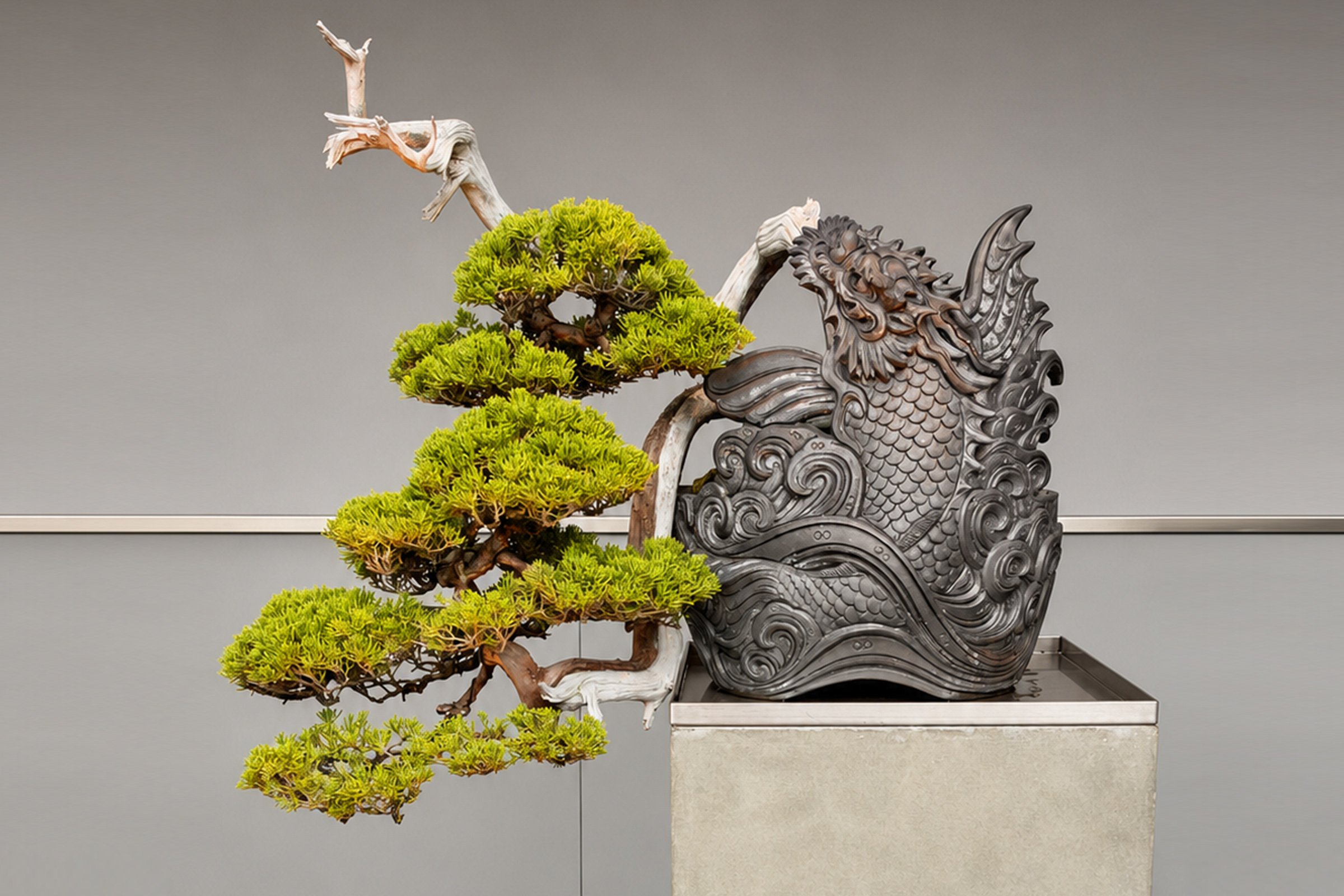
Our founder, Minal, has a love for bonsai. The appeal lies in the relationship between a living tree and the creative decisions that shape its presentation. There is form, texture, balance and space to consider, alongside the patience involved in watching something develop.
Time spent with bonsai brings familiar creative questions into view. Where does the eye travel? What gives a composition its character? How much intervention does it need?
A living composition
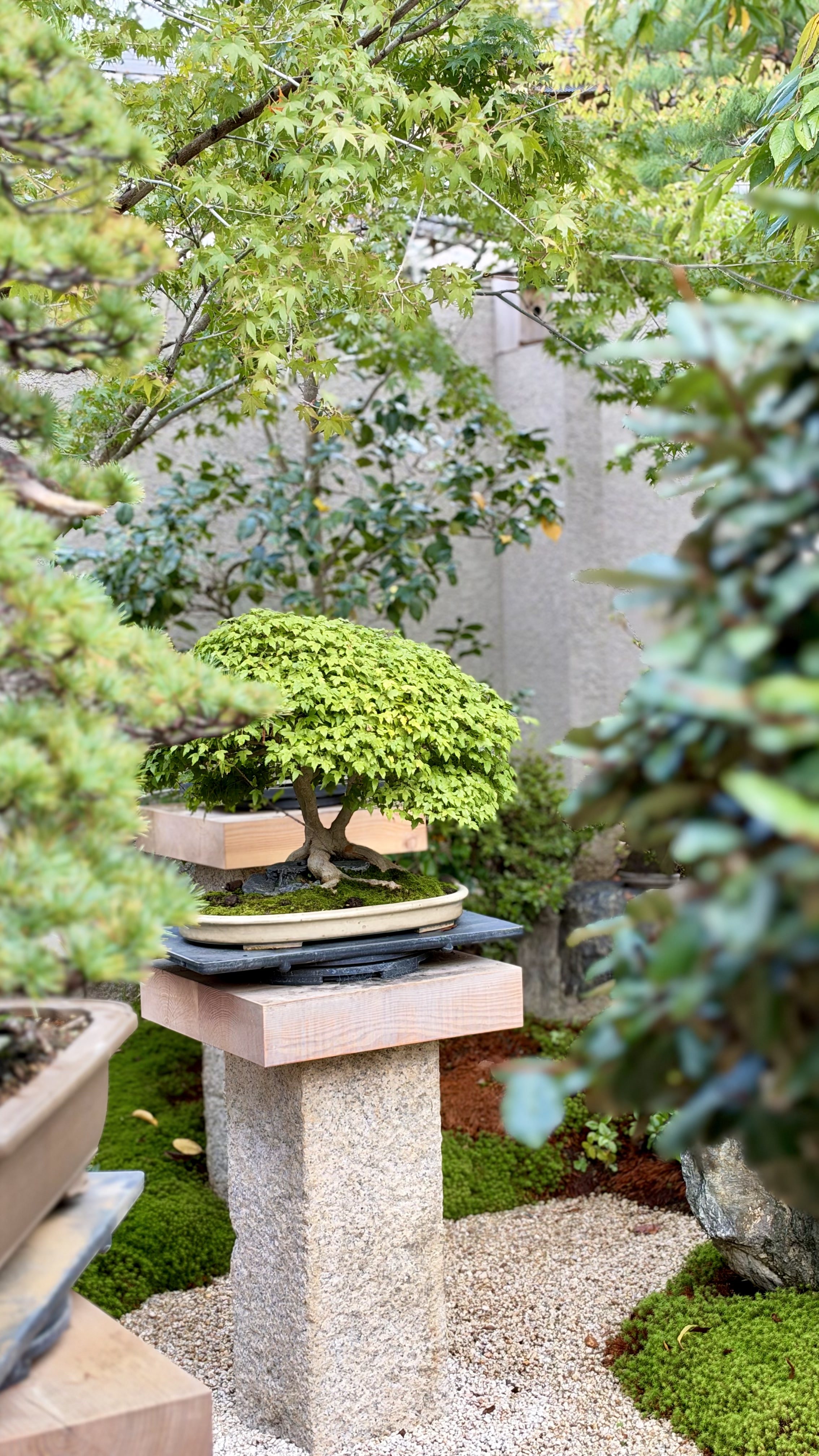
A bonsai can be appreciated as a whole and through its individual details. The roots establish a sense of grounding. The trunk carries movement and texture. Branches build the outline, while foliage affects how light and space move through the tree.
The pot also contributes. Its proportions, colour and surface sit in relation to everything above it. Each part has its own qualities, but the overall impression depends on how they work together.
The space between branches
The open areas of a bonsai can be as interesting as the foliage. A gap allows us to follow the line of a branch or see the trunk behind it. It gives the form definition and creates changes in density as our eye moves around the tree.
That sensitivity to space feels familiar in graphic design. The margin around an image, the distance between lines of type and the room around a logo all influence how we read a composition.
Character and time
A curved trunk, textured bark or an unexpected branch gives a tree its particular presence. Looking closely reveals evidence of growth and change.
Bonsai develops through ongoing care. There is observation, a decision, and time to see what follows. That pace is part of its attraction. It encourages a closer look at what is already there and what might develop next.
Three places visited in Japan brought different perspectives to that interest, from contemporary creative culture to a temple garden and the practice of cultivating the trees themselves.
TRADMAN’S BONSAI
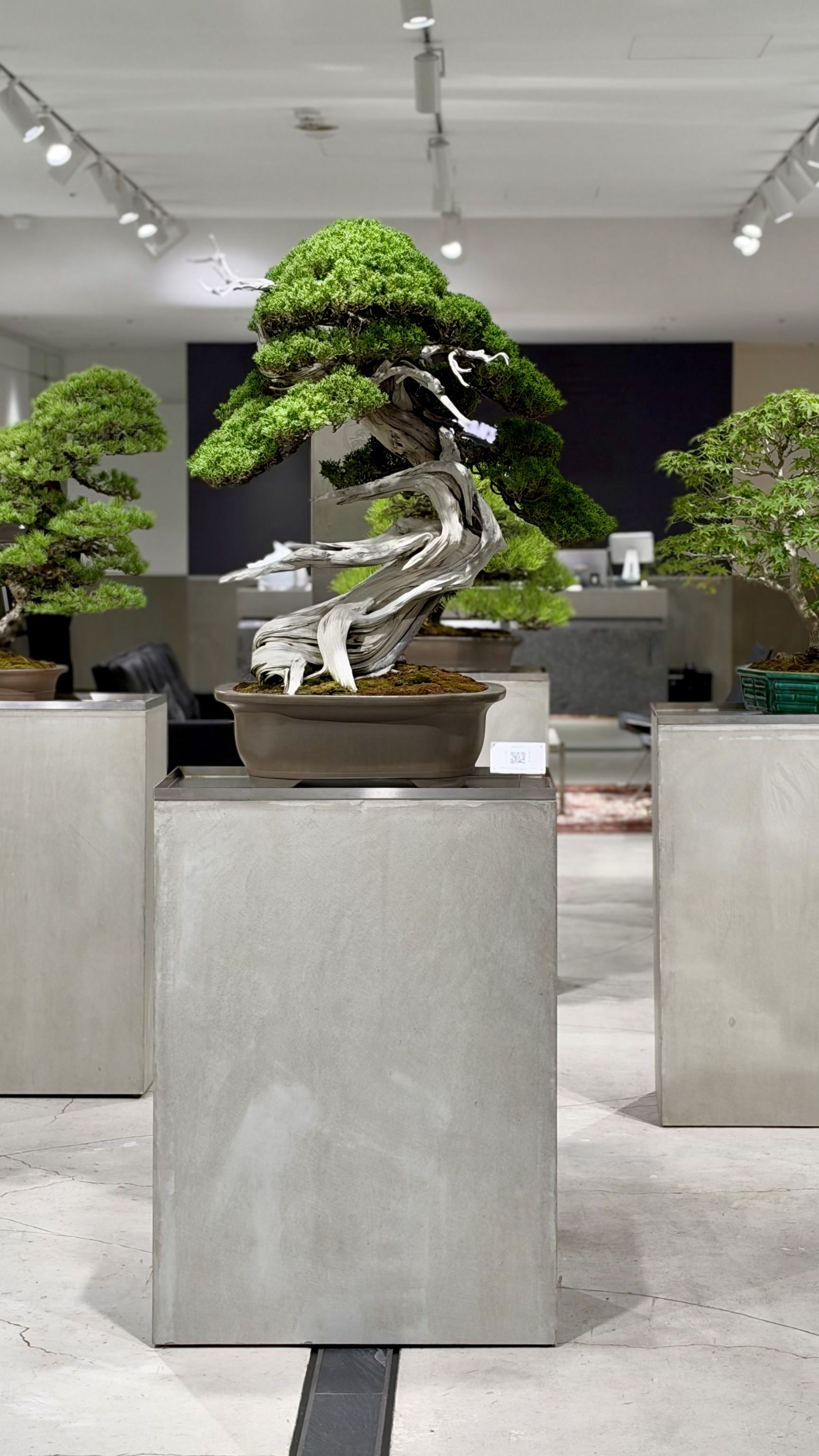
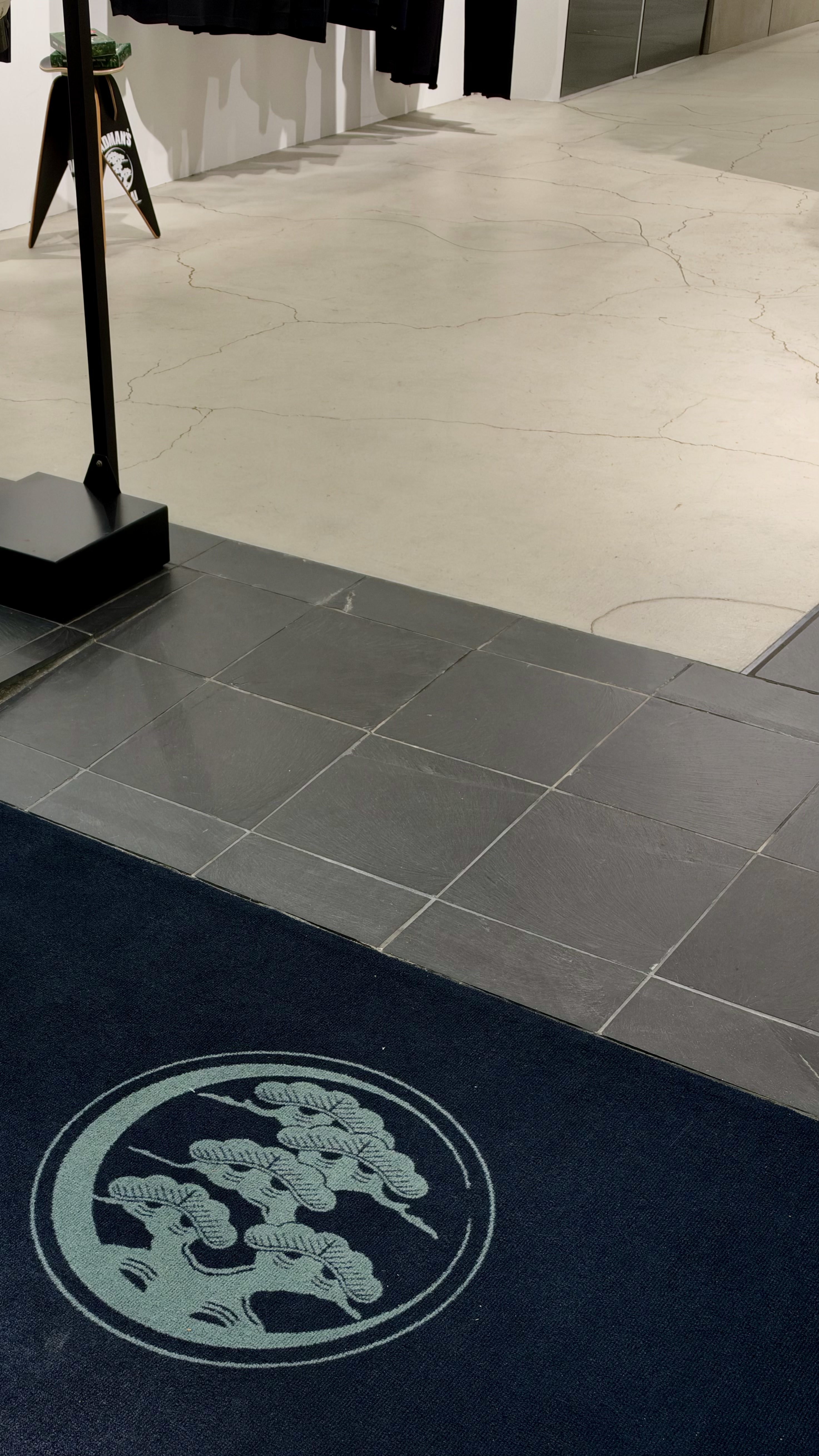
TRADMAN’S felt closest to our own creative taste. Their approach brings bonsai into conversation with fashion, street culture and contemporary art, giving the trees a presence that feels confident and current.
Founded by Teppei Kojima, TRADMAN’S works across bonsai, installations and collaborations with brands including Nike, Dior and RIMOWA. The relationship between the tree, its setting and the audience becomes part of the creative work.
That approach resonates with us. A traditional craft can carry its history into a new context, while the way it is presented opens up another way to appreciate it. The tree, pot, surrounding materials and visual identity all contribute to the experience.
The connection between bonsai, design and contemporary culture made this a particular highlight of the visits. It offered a way to think about how something deeply established can continue to develop its relevance and character.
Hōshun-in Bonsai Garden, Kyoto
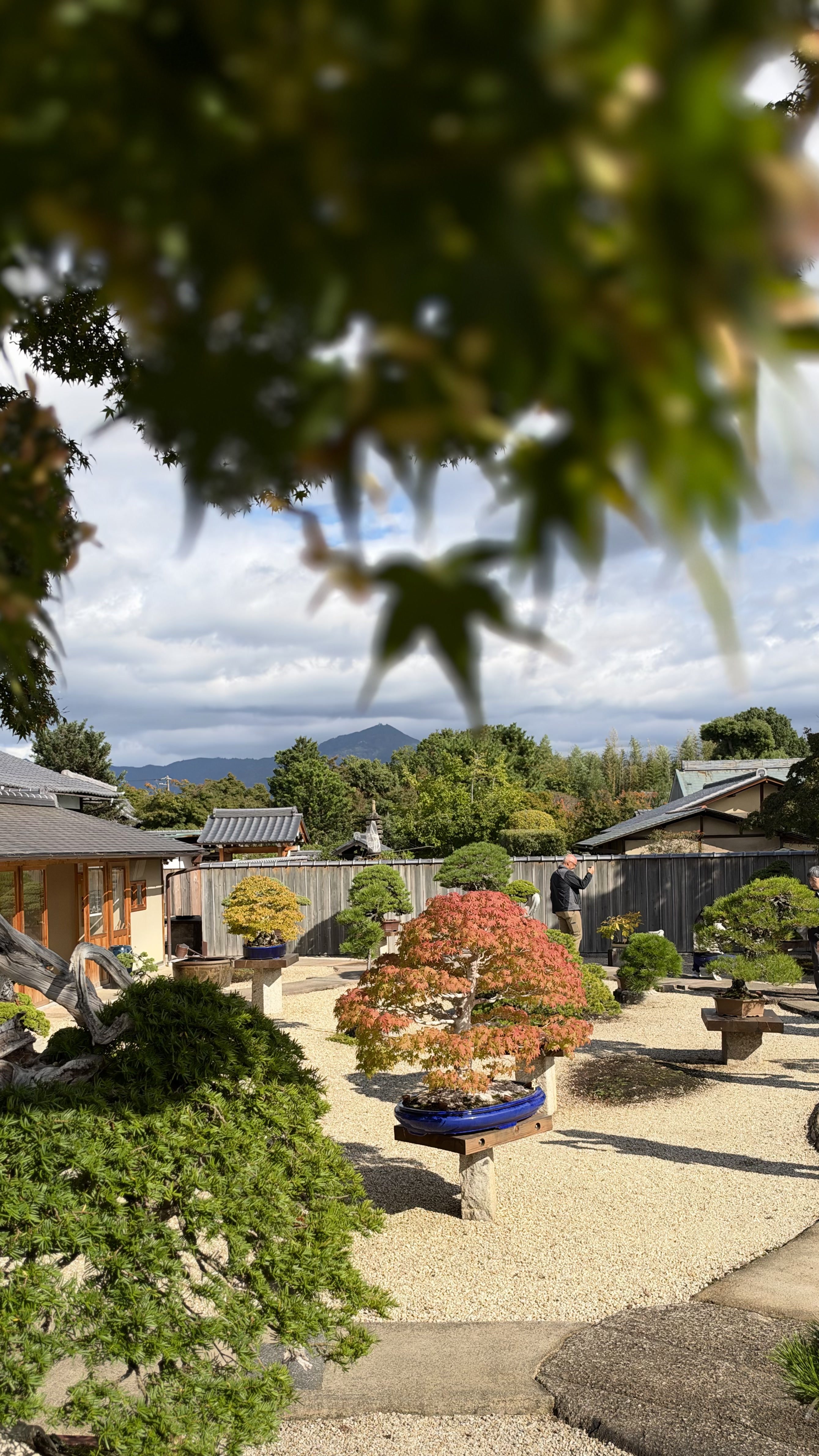
At Hōshun-in, within Kyoto’s Daitoku-ji temple complex, bonsai sits within a wider garden setting. The trees can be considered alongside the space around them, with attention moving between individual details and the overall arrangement.
The setting gives us a way to approach the work, while the trees invite a closer look at texture, shape and scale. Those relationships between an object and its surroundings offer plenty to consider.
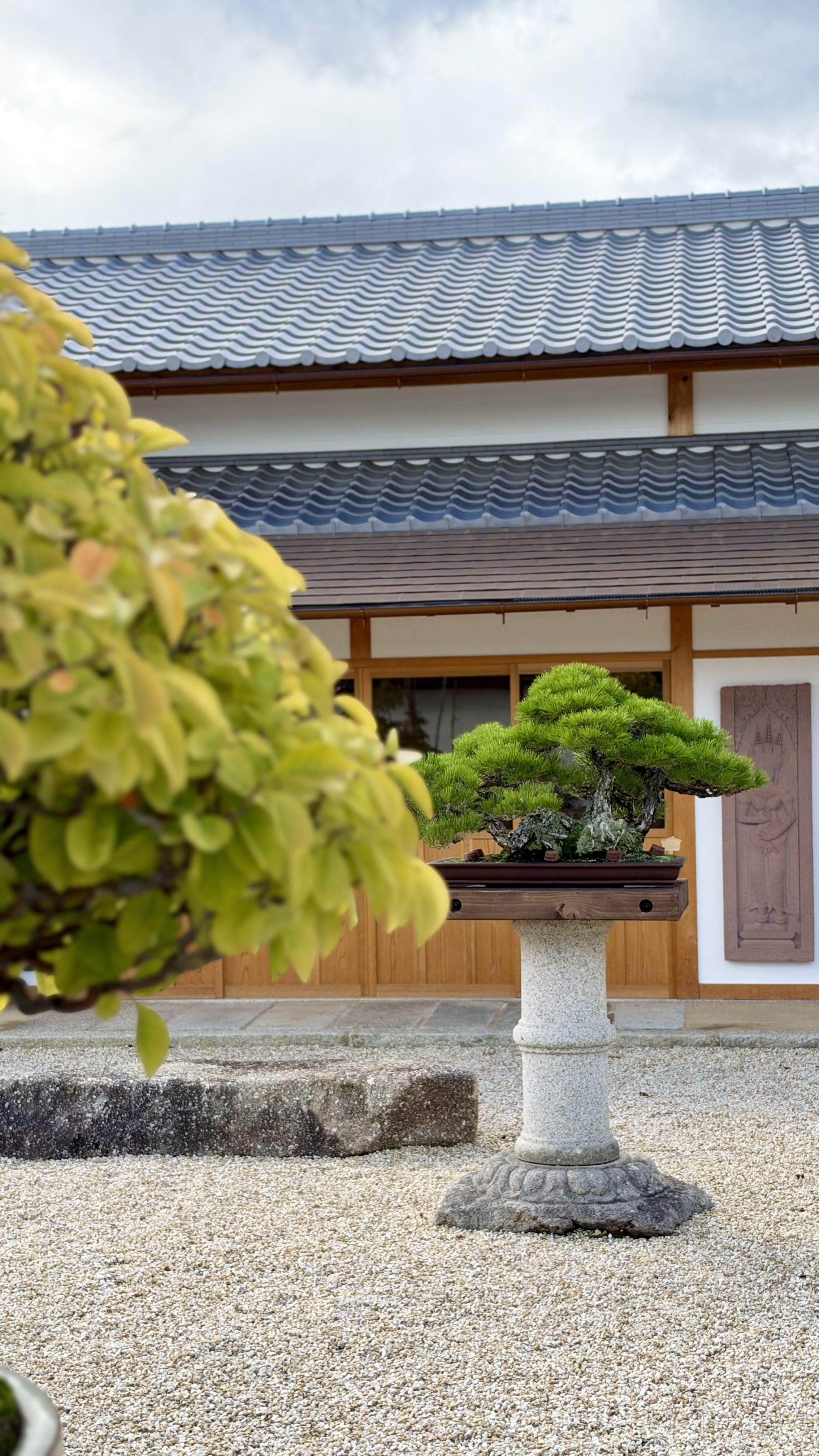
Eisei-en Bonsai
Another stop was Eisei-en in Kyoto, the bonsai garden of Bjorn Bjorholm. Alongside its trees, Eisei-en’s wider work includes education covering the horticultural, design and maintenance aspects of bonsai.
That combination brings the creative and practical sides of the subject together. The form we appreciate depends on an ongoing understanding of the living tree. It gives patience, observation and care a place within the creative process.
Looking beyond the studio
Bonsai is one of the interests that encourages us to look beyond the usual design references. A tree offers a way to think about proportion, movement and the relationship between detail and the whole. It also asks us to slow down enough to notice those things.
There is always another branch, surface or change in light to look at, even when the tree itself is familiar.